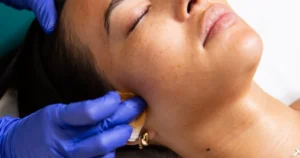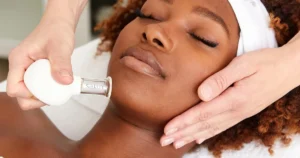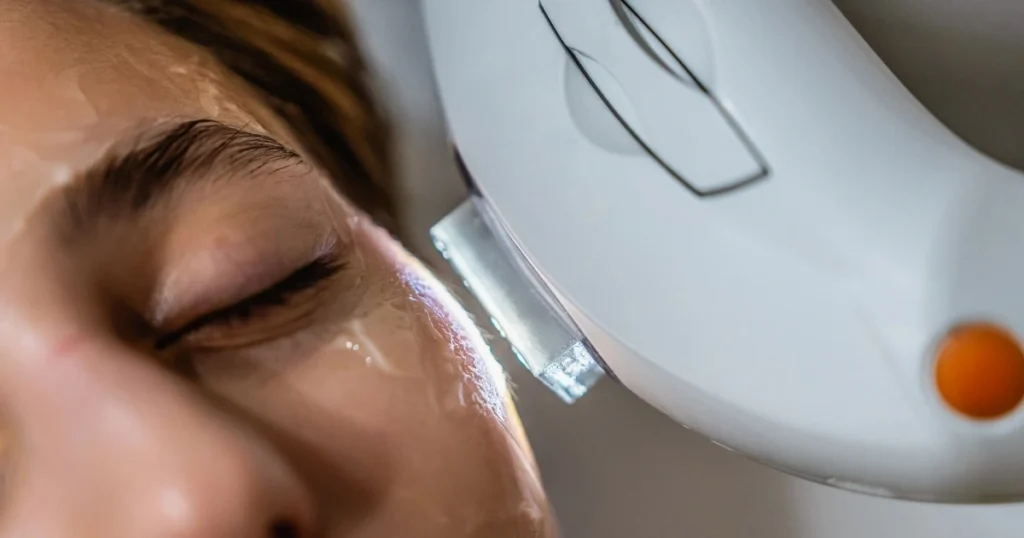
If you’ve got sun spots, age spots, redness, or skin tone that just feels uneven no matter what you try, chances are you’ve come across IPL somewhere along the way. But what’s actually happening under the surface when you get treated?
At Collab Medspa, IPL is one of our go-to tools for a handful of common skin concerns, and one of the reasons we love it is how customizable it is. We can treat your whole face, or we can zero in on just the spots that bother you.
That said, IPL isn’t for everyone. What works for your skin depends on your tone, your concerns, the medications you take, how much sun you get, and what you’re actually hoping to achieve.
After 10 years of treating skin, here’s what we’ve learned: great results don’t come from picking the most aggressive option on the menu. They come from picking the right option for the person in front of us.
What Is an IPL Photofacial?
IPL stands for Intense Pulsed Light. It is different from a laser. Where a laser fires a single, specific wavelength, IPL sends out a broader range of light wavelengths at once.
That light gets absorbed by certain colors in your skin. It’s what lets us go after unwanted brown pigment and redness while keeping the skin around it as protected as possible.
It’s especially useful for sun spots, age spots, redness, visible blood vessels, and skin tone that’s lost its evenness.
And because it’s so flexible, some clients come in wanting their whole face done, while others just want a handful of spots gone from their hands, arms, chest, or face. We build the treatment around what you actually need — not a one-size-fits-all protocol.
How Does IPL Work on Sun Spots and Age Spots?
When we’re going after brown spots, the IPL light gets absorbed by the melanin sitting in that spot. That absorbed light turns to heat, and the pigment inside the spot starts to break apart.
Here’s the part that catches people off guard: right after treatment, those spots often look darker, not lighter. Don’t panic — that’s usually a normal part of the process.
Over the next several days, the broken-down pigment works its way toward the surface. It can look a bit like tiny pepper flakes sitting on your skin before it gradually flakes away. As that happens, the spots lighten up and your skin starts to look clearer and more even.
We tend to reach for IPL especially for deeper, stubborn sun spots that haven’t budged much with chemical peels.
How Does IPL Help Facial Redness?
IPL isn’t just for pigment — it can also target redness, including some visible capillaries and redness tied to sun damage.
Here, instead of targeting melanin, the light goes after hemoglobin in your blood. That creates heat in the targeted vessel, the vessel closes up, and your body gradually clears it away. For the right client, that means less visible redness without the downtime that comes with more aggressive treatments.
But redness isn’t always caused by the same thing. Before we ever decide how to treat it, we want to understand what’s actually causing yours.
Can IPL Help With Acne?
For some clients dealing with active acne, IPL can play a supporting role in a bigger treatment plan. Depending on the system and settings we use, light-based treatment may help calm acne-related inflammation and target the bacteria that contribute to breakouts. We don’t treat it as a replacement for every acne treatment, though.
One of our clients is a good example of what we mean. She’d gone through AviClear treatments to address her acne. AviClear works differently — it targets the sebaceous glands that produce oil — and its results tend to keep improving over time.
The problem is, waiting for those long-term results can feel endless when you’re still breaking out in the meantime. So for her, we used IPL every couple of months to help manage the active acne while her AviClear results caught up.
Now her skin looks amazing, and the AviClear benefits have fully kicked in. The IPL sessions just helped her get through that in-between stretch without feeling stuck.
It’s a good reminder that not every skin concern needs to be solved with a single technology. Sometimes the best plan is a combination.
Do You Have to Treat Your Entire Face With IPL?
Nope — and honestly, that’s one of our favorite things about it. We can do a full-area treatment, or we can target just the individual spots you care about.
Take one of our longtime clients, a guy who golfs constantly. After decades outside without consistent sunscreen, he started noticing more pigmentation and sun spots as he got older. Chemical peels weren’t his thing, and he didn’t want real downtime. His main complaints were spots on his arms and hands. IPL turned out to be a great fit.
We treat his full face to even out his overall tone, then target the specific spots on his arms and hands. He runs through a series about once a year, with touch-ups whenever he needs them.
And yes — he’s still out on the course every week. He’s much better about sunscreen these days, but he’s still getting plenty of Arizona sun, so treating that sun damage is a bit of an ongoing project for him.
That’s real life, though. We’re not here to tell clients to give up the things they love. We’re here to help them protect their skin while giving them realistic ways to deal with sun exposure and aging.
How Many IPL Treatments Do You Need?
This is probably the biggest misconception we run into. A lot of people walk in expecting one treatment to erase years of sun damage. In most cases, that’s just not how it works.
We actually treat that first IPL session a little differently than the rest — it tells us how your skin specifically responds to the light. Throughout treatment, we’re watching closely: how your skin reacts, how you’re feeling, and adjusting as we go. Safety always comes first.
IPL creates heat in the skin, so we’re not going to crank up the settings just to deliver a dramatic result on day one. Instead, we build treatments on top of each other. Once we understand how your skin responds, we can make smarter calls in future sessions and work toward stronger results without cutting corners on safety.
So if anyone promises you that one IPL session will fix everything, take that with a grain of salt. Skin just doesn’t work that way.
Who Is a Good Candidate for IPL?
IPL works best when there’s a clear contrast between the pigment we’re targeting and the skin around it. Because IPL can also be absorbed by melanin in general, your skin tone plays a big role in whether it’s a safe choice for you.
If you have a darker skin tone, IPL might not be the right fit. To keep skin with more melanin safe, we sometimes have to dial the settings down so far that the treatment stops delivering the result you’re after. In those cases, we’ll usually point you toward something else, like a chemical peel, depending on your skin and what you’re trying to fix.
This is exactly why a consultation matters so much. Just because a treatment is trending doesn’t mean it’s right for your skin.
Why Your Medications Matter Before IPL
Before any IPL session, always give your provider a full, honest list of what you’re taking. Some medications increase photosensitivity, which makes your skin more reactive to light and raises the risk of an unwanted reaction.
That risk isn’t limited to any particular skin tone — it can matter for anyone. So don’t leave something off your list just because you assume it’s not relevant. Let your provider be the one to decide.
Why Sunscreen Is So Important After IPL
If daily sunscreen isn’t something you’re willing to commit to, IPL might not be the treatment for you. We feel that strongly about it.
We’re using IPL specifically to treat signs of sun exposure — so continuing to expose your skin to UV without protection works directly against everything we’re trying to accomplish.
That matters even more here in Arizona, where sun exposure is basically baked into everyday life. You don’t have to become a homebody. You just need daily SPF and some smart sun habits built into your routine.
Think back to our golfing client — he didn’t quit golf. He just made sunscreen part of protecting the investment he was putting into his skin.
IPL vs. Chemical Peels: Which Is Better for Sun Spots?
Honestly, there’s no single answer here. We use both, depending on the person. For some clients, chemical peels do a great job improving pigmentation and overall skin quality. For others, IPL reaches stubborn sun spots that peels just haven’t touched. And sometimes, we layer both approaches over time.
That’s one of the biggest lessons a decade of doing this has taught us: Don’t choose a treatment because it’s popular. Choose the one that actually makes sense for your skin.
Our job is to understand your skin, your lifestyle, your goals, and how fast you’re hoping to see change — then recommend the technology, or combination of technologies, that fits.
Is an IPL Photofacial Worth It?
For the right person, absolutely. IPL can do a great job on sun spots, age spots, redness, visible vessels, and uneven tone. It’s quick, it’s customizable, and it typically comes with a lot less downtime than more aggressive resurfacing treatments.
But that phrase — for the right person — is doing a lot of work in that sentence. We don’t believe in running every client through the same plan. Depending on what you need, we might treat a full area, focus on a handful of spots, or pair IPL with something else entirely.
After 10 years of doing this, we’ve learned that sometimes IPL is exactly the right call. Other times, it’s not even close, and something else entirely makes more sense. That’s exactly why your treatment should start with a real conversation about your skin — not just a device we happen to have in the room.