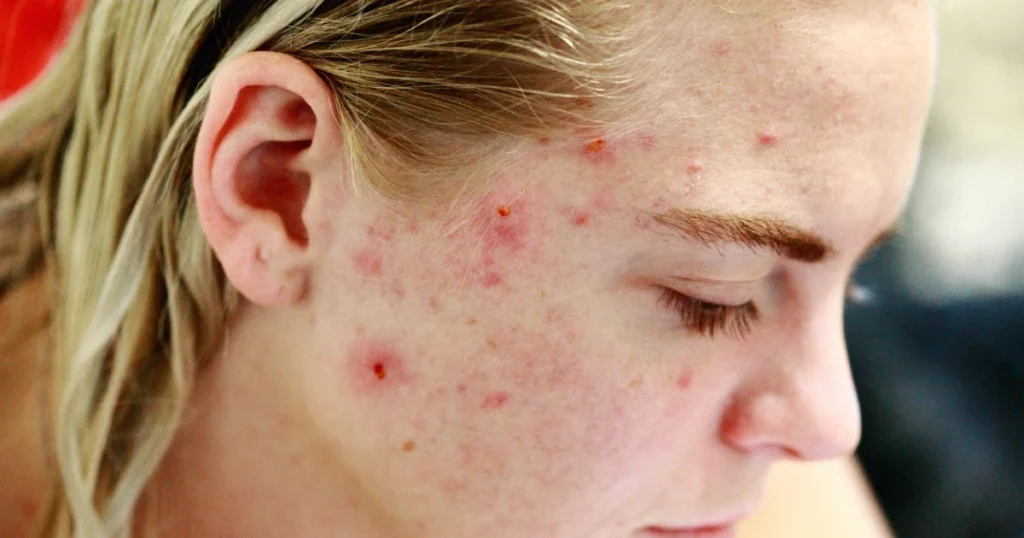
If you struggle with acne, chances are you’ve asked yourself this question more times than you can count: what can I do for my acne?
Maybe you tried a new cleanser. Then an acne cream. Then a prescription, or whatever product was trending online this week. And then, just when you thought you’d found something that worked, another breakout showed up — so you added something else on top of it.
Fast forward a few months, and your bathroom counter looks like a skincare aisle. Yet somehow your skin feels more irritated than the day you started.
We see this constantly at Collab Medspa. And if there’s one lesson we come back to again and again with our acne clients, it’s this:
Keep it simple. Keep it consistent.
Instead of declaring war on every new breakout the moment it appears, we want you to slow down and ask a different question: What does my skin actually need right now? And then, why might I be breaking out in the first place?
That one shift in mindset can change everything about how you approach your skin.
Stop Fighting Every Breakout
It’s tempting, when a pimple shows up, to throw everything at it. The acids come out. Then the spot treatments. Maybe an astringent or a scrub gets added for good measure.
But more isn’t always better — and in acne treatment, it’s often the opposite.
Piling on active products can dry out your skin, irritate it, and quietly wear down your skin barrier. And your skin barrier isn’t optional — it’s the foundation everything else depends on. So before we reach for stronger acne treatments, we make sure that foundation is actually intact.
Here’s the way we like to put it: you need healthy skin to handle the treatments that fight acne. That’s why so many of our acne plans at Collab Medspa start by simplifying, not adding.
Start With a Simple Routine
Before we hand anyone a long list of new products, we look at the basics first.
For most people, that means three things: cleanser, moisturizer, SPF. Keep the skin clean, keep it nourished, keep it protected.
From there, we talk through what you’ve already tried. What actually helped? What made things worse? What did absolutely nothing? If something’s been working, we keep it — but you probably don’t need five active ingredients competing for space on your face. One or two, chosen carefully, is usually plenty.
We’re not trying to throw the kitchen sink at your acne. We’re trying to build something you can realistically stick with, day after day.
Because simple and consistent will always beat complicated and inconsistent.
Where Professional Treatments Come In
Once your home routine is solid, that’s when we start talking about in-office options.
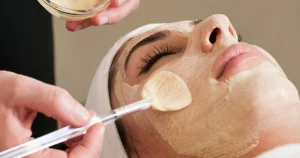
There’s no single treatment that works for everyone — acne isn’t one thing, and neither is the right fix for it. So we look at your skin, the type of acne you’re dealing with, what you’ve already tried, your goals, even your day-to-day lifestyle. From there, we might talk about chemical peels, IPL Photofacials, HydraFacials, or AviClear.
Here’s how we think about each one.
Chemical Peels: Best for Congestion and Marks
Chemical peels tend to shine on acne-prone skin, particularly when congestion and enlarged pores are the main issue. They’re also useful when old breakouts have left visible marks or scarring behind.
That said, downtime is real. Some peels leave visible peeling for several days, so we always talk through what actually fits your schedule and your life — not just your skin.
If you’re dealing with minor breakouts or congestion and a week of peeling isn’t realistic, the Prodigy Peel is often a gentler alternative worth considering.
The goal is always to match the treatment to your skin — not to reach for the strongest option just because it exists.
IPL Photofacial: Good for Lighter Breakouts
An IPL Photofacial works well for certain kinds of acne — specifically the more superficial, minor breakouts. It targets bacteria below the skin’s surface, and it’s quick, with very little downtime.
What it’s not great for is deep, cystic acne. That’s an important distinction, because “acne” means something different for nearly everyone who walks through our door. The treatment has to match what’s actually happening on your skin.
HydraFacials: A Deep Clean, Not a Cure-All
We genuinely love HydraFacials, especially when skin needs a thorough reset. On its own, a HydraFacial can make a real difference — and it also plays well as part of a bigger acne plan. We even offer an advanced version with manual extractions and blue light for deeper breakouts.
But here’s something we don’t say often enough: you can have too much of a good thing.
One client of ours was getting two HydraFacials a month, trying everything she could to get her acne under control. She was still breaking out — and her skin was starting to feel raw and irritated on top of it.
Before we even brought up AviClear, we pulled back. We dropped her to one facial a month, alternating between a HydraFacial and a calming, hydrating Signature Facial. We also stripped her home routine down to the essentials: iS Clinical Cleanser, SHEALD Recovery Balm, SPF, and Active Serum for stubborn spots.
It took about three months. But slowly, the brightness and health came back into her skin. She still had moderate cystic acne underneath it all — but now her skin was in a strong enough place that AviClear could actually do its job.
Her story is a good reminder: more treatment doesn’t automatically mean better results.
AviClear: For Persistent, Cystic Acne
Peels, HydraFacials, and IPL are all valuable — but for the most part, they’re managing the symptoms of acne. AviClear takes a different route entirely.
It uses laser light to target the sebaceous glands that produce oil. Less oil production means less fuel for acne. That’s why we often bring AviClear into the conversation for clients with cystic acne, or for anyone who feels like they’re fighting breakouts no matter what they try.
The standard series runs three sessions, spaced about four to six weeks apart. It’s designed to work across skin tones, and it can address inflammatory, hormonal, and cystic acne alike.
Even with AviClear on the table, though, the fundamentals still matter. The foundation of healthy skin never stops being important.
Sometimes the Answer Isn’t Another Treatment
One client taught us this lesson better than anyone.
She’d used Cetaphil for years on her dermatologist’s recommendation, and she trusted that advice — understandably hesitant to change course. AviClear wasn’t in her budget at the time, so we started with a few months of HydraFacials and Prodigy Peels instead.
Her skin improved. But without a consistent home routine or regular facials to keep it going, she found herself back at square one a few months later.
So this time, we changed direction entirely. Instead of adding more treatments, we said: let’s forget the treatments for now.
We focused on monthly facials, a solid home routine, and consistency above all else. She joined our membership, committed to showing up every month, invested in real skincare, and kept using the topical cream her dermatologist had prescribed.
Within two months, her skin had transformed — healthier, smoother, noticeably clearer.
More than that, she finally had a routine she could actually keep up with. And when a bigger breakout did show up now and then, we still had the Prodigy Peel in our back pocket.
Her results didn’t come from doing everything. They came from finally doing the right things, consistently.
What You Do Outside Our Office Matters Just as Much
Your acne treatment doesn’t end when you walk out our door. What happens during the other twenty-three hours of your day counts too.
You don’t need to build your whole life around your skin. But small habits add up over time:
- Wash your bedding and pillowcases regularly
- Use clean towels — and let them dry fully between uses (a dedicated face towel isn’t a bad idea)
- Rinse off sweat after a workout instead of letting it sit
- Keep your hands off your face, and that includes your phone and water bottle
- Resist the urge to pick
- Pay attention to what’s in your makeup
- Don’t let skipping your skincare routine become the norm
None of these alone will cure your acne. But together, they support the bigger picture — keeping your skin healthy while you work on getting it under control.
Acne Treatment Takes Time
This might be the hardest part of all of this: it takes time.
When a new breakout shows up, you want it gone immediately. We get that completely. But constantly switching products and treatments only makes it harder to figure out what your skin actually needs.
So instead of reacting to every breakout with a new attack plan, try pausing and asking:
What does my skin need right now? Is it irritated, or dry? Have I been sweating more than usual? Have I been touching or picking at it? Did I just add three new products at once? Did I quietly stop doing the routine that was actually working?
Sometimes the answer isn’t another product at all. Sometimes your skin just needs support.
Keep It Simple. Keep It Consistent.
If you take one thing away from this, let it be this: healthy skin is easier to treat.
You don’t need every viral product on the market. You don’t need another acid. And you don’t have to go to war with your face every time a breakout shows up.
Start with the basics — cleanse, nourish, protect with SPF. Choose your actives carefully. Pay attention to the small habits that add up. And when it’s time for a professional treatment, choose the one your skin actually needs — whether that’s a chemical peel for congestion, IPL for lighter breakouts, a HydraFacial for a deeper clean, or AviClear for acne that just won’t quit.
Above all, give your skin the time it needs to actually heal.
Keep it simple. Keep it consistent.
If you’re tired of guessing what your skin needs, the team at Collab Medspa in Scottsdale is here to help you build a plan around your skin, your lifestyle, and your goals.