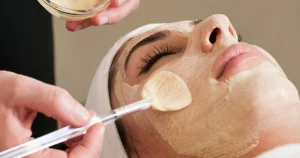
If you’ve been thinking about trying dermaplaning, chances are you’ve already asked yourself this question:
“Wait… will my hair grow back thicker or darker?”
Short answer: no.
Longer answer: this is probably the single biggest myth in the dermaplaning world, and honestly, it’s an understandable one. But it’s still a myth. Shaving your legs doesn’t make the hair grow back thicker either — if it did, we’d all be walking around with fur by now. Same principle applies here.
We hear this question constantly from first-time clients at Collab Medspa, and we never mind answering it. It’s a completely fair thing to worry about. Nobody wants to sign up for a treatment that makes their facial hair situation worse. Good news: that’s just not how hair works.
Your Hair Isn’t Actually Changing
Here’s what’s really happening. Dermaplaning removes vellus hair — the soft, fine, barely-there hair most of us call “peach fuzz.” It’s not the same as the coarser hair on other parts of your body, and it doesn’t behave the same way either.
Because vellus hair is so fine to begin with, it just grows back exactly as it was. Not thicker. Not darker. Not suddenly wiry. Most people brace themselves for stubble and never actually feel it, because that’s simply not what this hair does.
We Get Why the Myth Sticks Around
A lot of new clients hesitate to add dermaplaning onto their facial because a friend mentioned this, or they read it somewhere online. We’re not going to argue with you about it or try to talk you into anything.
Honestly, we’d rather build trust first. Some clients come in for a few regular facials before they’re ready to try dermaplaning, and that’s completely fine with us. We want you to feel informed, not pressured.
Then, almost without fail, something predictable happens.
We joke around the office that dermaplaning is a bit of a slippery slope. Once someone finally tries it and feels how smooth and fresh their skin is afterward, they’re usually asking for it at every visit — or every other one, at least.
Here’s the Part People Miss: It’s Not Really About the Hair
Most people walk in thinking dermaplaning is a peach-fuzz removal treatment. We see it a little differently.
The real win is the exfoliation. Deep, but gentle. Removing the fuzz is more of a nice bonus on top.
What dermaplaning actually does is clear away that layer of dead skin cells that tends to leave your complexion looking dull and tired. Afterward, skin usually feels noticeably smoother and looks brighter almost right away.
Clients tell us they notice things like:
- Softer, smoother skin
- A brighter, more even look
- Skincare products absorbing better
- Makeup going on more evenly
- That “just got a facial” glow
It also pairs nicely with treatments like chemical peels and IPL Photofacials, since clearing away dead skin helps everything else work a little harder — including improvements in uneven pigmentation over time.
What About Coarser Facial Hair?
Not every kind of facial hair is a good match for dermaplaning, and we’re upfront about that.
If coarse hair around the upper lip or chin is your main concern, we’ll usually point you toward waxing, or better yet, laser hair removal, since that actually targets the hair at the follicle instead of the surface.
That doesn’t mean dermaplaning is off the table entirely — you can still enjoy it everywhere else on your face while handling those specific areas a different way. We build every plan around your skin, not a one-size-fits-all script.
And Yes — This Applies to Men, Too
Men tend to get left out of this conversation, and we’re not sure why.
Taking care of your skin isn’t a “women’s thing.” It’s just skincare.
We see great results with men on the forehead, cheeks, and nose, where dead skin buildup happens just as easily. It’s an easy way to brighten skin, smooth texture, and help whatever products you use actually do their job.
If someone has thick beard growth, we simply work around it — no need to touch those areas to get the benefits everywhere else.
Is Dermaplaning Right for Everyone?
Not automatically, no. Like most skincare treatments, it depends on your skin.
We’re more cautious with clients dealing with active acne or rosacea. Sometimes dermaplaning still makes sense; sometimes another approach is the better call. That’s exactly why every facial starts with us actually looking at your skin first, rather than assuming what worked for someone else will work for you.
Why We’re Genuinely Believers
We don’t recommend anything at Collab Medspa that we wouldn’t do ourselves. Full stop.
In fact, most of our team gets a dermaplane every three to four weeks. We’ve watched our own skin get smoother and brighter over time, and we’ve watched the same thing happen for client after client. That’s not a sales pitch — it’s just what we’ve seen firsthand, which is why we talk about it with so much confidence.
The Bottom Line
Your hair will not grow back thicker or darker because of dermaplaning. That part’s settled.
What it will do is leave your skin cleaner, brighter, and noticeably smoother — which, for most people, ends up being the real reason they keep coming back.