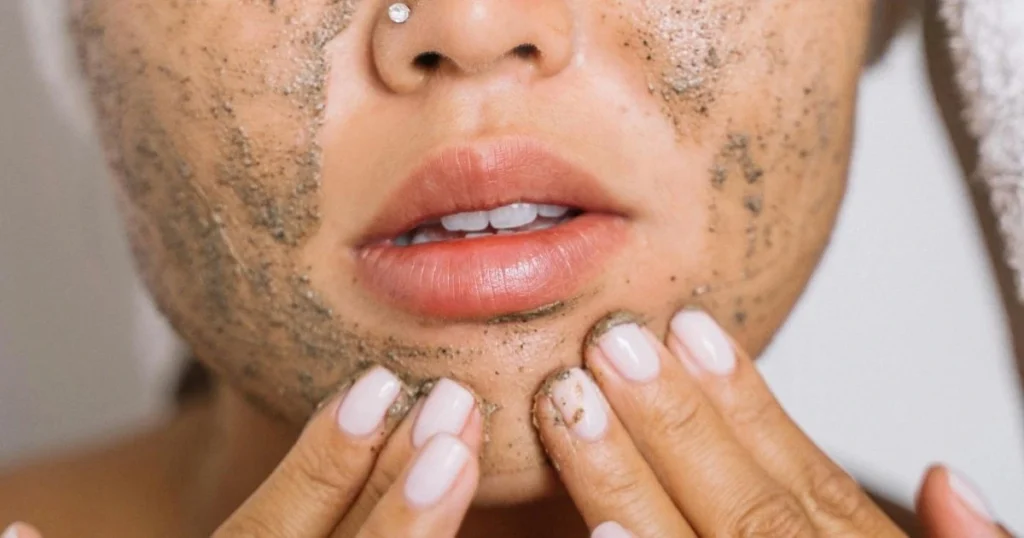
“How often should I exfoliate my skin?” is one of the most common questions we hear at Collab Medspa, and for good reason — the answer isn’t as simple as picking a number and sticking to it.
For most people with healthy skin, a good starting point is two to three times per week. But that’s just a starting point, not a rule everyone should follow. Your skin type matters. The products already in your routine matter. Any recent treatments matter. Most of all, how your skin actually feels matters. At Collab Medspa, our goal was never to get you exfoliating as much as possible – it’s healthy skin.
How Often Should You Exfoliate Your Face?
As a general rule, healthy skin can often handle exfoliation two to three times a week. Think of that as a baseline rather than a strict schedule, though. If your skin is dry, irritated, or compromised, you may need to scale back to once a week, or stop altogether until it feels healthy again. The same goes after certain professional treatments — your skin needs time to heal, and adding an exfoliant too soon can just create more irritation. The real skill here is learning to listen to your skin rather than defaulting to a fixed routine.
Does Dry, Flaky Skin Need Exfoliation?
This is where we see a lot of confusion. People see dry, flaky skin and immediately assume they need to exfoliate it away. Sometimes that’s true — dead skin can build up on the surface, leaving your skin rough and keeping your products from absorbing well, and gentle exfoliation can help in that case.
But dry, flaky skin isn’t always just dead skin waiting to be scrubbed off. If your skin is dry, flaky, red, or uncomfortable, exfoliating can actually make things worse. What it may need instead is nourishment and time to recover. Continuing to scrub at irritated skin usually just leads to more redness and discomfort. So before you reach for your exfoliant, ask a different question first: does my skin feel healthy right now? If the answer is no, focus on getting it healthy before you worry about texture.
Can You Exfoliate Too Much?
Yes — and it’s easier to do than most people realize. A common issue is layering several products that all exfoliate the skin in different ways without realizing it. Someone might use a physical scrub, then a chemical exfoliant, then top it off with retinol, never thinking of these as doing the same basic job. But combined, they can easily be too much for the skin to handle. Knowing exactly what’s in your routine — and what each product is actually doing — matters more than people expect. More isn’t always better.
Signs You May Be Over-Exfoliating
Your skin will usually tell you when you’re overdoing it, if you’re paying attention. If exfoliating starts to feel painful or uncomfortable, that’s your cue to stop. Stinging, burning, increased redness, and general irritation are all signs your skin needs a break. You shouldn’t have to fight through irritation to get good results — in fact, pushing through it usually moves you further from the skin you were trying to get in the first place.
A Collab Medspa Client Learned This the Hard Way — With Retinol
We once had a client who’d just finished her AviClear treatments for acne. After her final session, her skin had improved but she was still dealing with some mild breakouts, so we recommended a supportive skincare routine and facials to help things along.
Around the same time, a friend told her retinol could help with acne — which isn’t wrong, exactly. Retinol can help keep pores clear and remove dead skin that contributes to congestion. The problem was how often she was using it: every single day. By the time we saw her again, her skin was red, irritated, and inflamed, and she assumed AviClear was to blame.
That didn’t line up with what we were seeing, so rather than guess, we walked through her entire routine step by step — and found the missing piece: daily retinol. We had her stop using it, skip exfoliation entirely for two to three weeks, and come back for a skin check. When she returned, her skin was calm and healthy again. It was a good reminder that even a genuinely helpful ingredient can turn into a problem once your skin gets too much of it.
Physical vs. Chemical Exfoliation: Is One Better?
Another client taught us a different lesson. She’d been loyal to an apricot scrub for years and loved how smooth her skin felt right after using it — even though rough physical scrubs like that can be irritating over time. Old habits are hard to break, so we didn’t push her to overhaul everything overnight. Instead, we introduced professional alternatives gradually.
She started using the Eminence Strawberry Rhubarb Dermafoliant once a week, along with the iS Clinical Active Peel System once a week. Over time, she noticed something she hadn’t expected: her skin didn’t just feel softer right after exfoliating, it stayed softer longer. Once her skin was healthy and ready for it, we eventually added a gentle retinol to her routine. Today, her skin looks healthier and more radiant than it has in years — proof that skincare progress often comes less from doing more and more from finding the right products, timing, and patience.
How Often Should You Exfoliate After a Medspa Treatment?
Your normal routine will likely need to shift around professional treatments. At Collab Medspa, we generally recommend pausing retinol about a week before a treatment, and clients can often restart it about a week afterward — though this depends on the specific treatment and how the skin is healing. We also often recommend a dermaplaning facial around two weeks post-treatment to help clear away dead skin left behind during recovery.
Physical or chemical exfoliation can sometimes resume sooner than that, but there’s no single timeline that fits every person or every treatment. That’s why the post-treatment instructions your provider gives you matter more than any general guideline — when in doubt, ask before restarting.
Should You Exfoliate If Your Skin Is Irritated?
If your skin feels irritated, uncomfortable, or just off, it’s usually time to pause exfoliation — and this is one of the most important things we want clients to understand. You don’t need to keep exfoliating until every last flake disappears. Step back and look at the bigger picture instead: Are you red? Does your moisturizer suddenly sting? Have you added a new active recently, or layered several exfoliating products at once? Did you just have a professional treatment? Often, your skin is asking for less, not more.
How Do I Know When My Skin Needs Exfoliation?
Pay attention before you reach for anything. If your skin feels healthy but has some dead skin buildup or rough texture, gentle exfoliation is probably a good call. If it feels irritated, red, painful, or overly sensitive, skip it for now. This is part of why we’re not big fans of rigid skincare rules — two to three times a week is a solid guideline for healthy skin, but ultimately, your skin gets the final say.
The Most Important Exfoliation Rule: Listen to Your Skin
At Collab Medspa, everything comes back to one goal: healthy skin. That’s the goal of a facial, the goal of a professional treatment, the goal of the products we recommend — and yes, the goal of exfoliation too. If something in your routine is leaving your skin feeling worse, that’s the signal to take a closer look and adjust, not to push through. There are no bonus points for tolerating redness, burning, or irritation.
Listen to your skin — and if you’re not sure what it’s telling you, that’s exactly what we’re here for at Collab Medspa. We can look at your current products, figure out what your skin actually needs, and build a routine that supports it instead of just adding more steps. Because when it comes to exfoliation, more isn’t always better. Healthy skin is better.