If you’ve been researching treatments for acne scars, fine lines, uneven texture, or aging skin, you’ve probably run into a wall of similar-sounding terms. Microneedling. RF microneedling. RF resurfacing. Morpheus8. SkinPen. It gets confusing fast, and honestly, we don’t blame you for feeling a little lost in it.
At Collab Medspa in Scottsdale, we offer SkinPen microneedling and Venus Versa RF Resurfacing. We don’t currently offer RF microneedling, though we talk to plenty of clients who call us specifically asking for more information about the differences between all the options.
So what’s actually different here? And more importantly, which one makes sense for your skin? That really comes down to what you’re trying to fix.
What Is Traditional Microneedling?
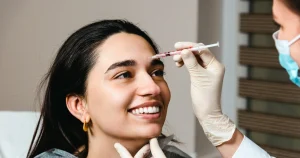
Traditional microneedling works by creating tiny, controlled micro-injuries in the skin. That kicks off your skin’s natural healing process and gets new collagen production going.
We use SkinPen for all of our traditional microneedling at Collab Medspa. It’s a favorite of ours for clients working on more surface-level concerns — fine lines, uneven texture, mild acne scarring, general skin quality. It’s also, hands down, one of our most popular treatments.
A lot of the clients we see already have healthy skin. They’re not trying to fix a problem so much as take things up a notch.
One client came to us before her wedding wanting exactly that. Her skin was already in good shape, but she wanted it glowing for her big day. She planned ahead and did a series of microneedling sessions on her face, neck, and décolleté. By the wedding, her skin looked bright, smooth, and healthy — and months later, it still did.
That’s a good reminder that you don’t always need the most aggressive option to get the result you’re after.
Microneedling After Acne Treatment
We also love SkinPen for younger clients who’ve just finished AviClear acne treatment.
AviClear does a great job treating active acne, but once that clears up, some clients are left with scarring behind. For younger clients with otherwise healthy skin and mild scarring, traditional microneedling is often the right next step.
We’ve watched microneedling help these clients fade the appearance of scarring and get their skin looking healthy again. And honestly, after years of fighting acne, watching your skin bounce back means more than just a cosmetic win. It can genuinely help someone feel like themselves again.
What Is RF Resurfacing?
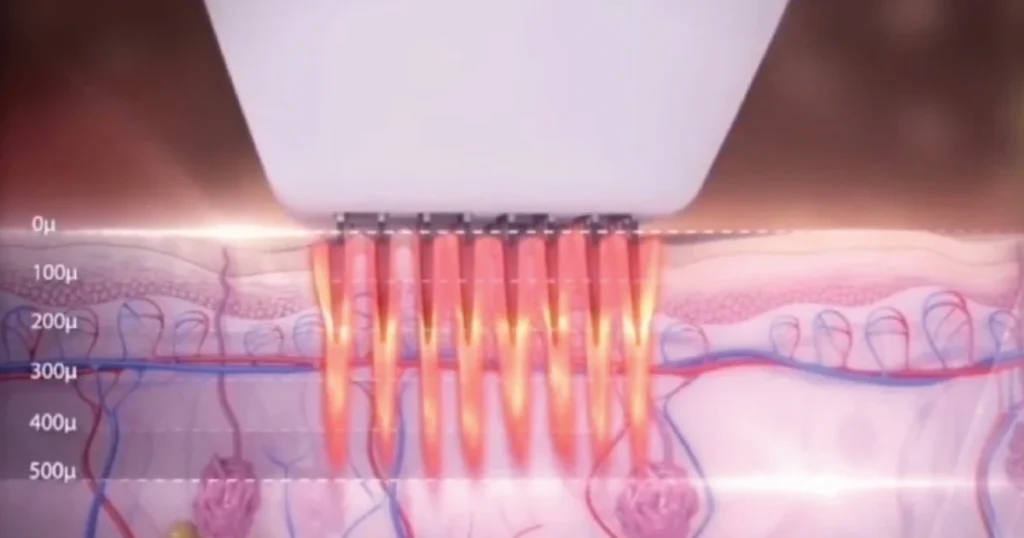
RF stands for radiofrequency. At Collab Medspa, we use the Venus Versa NanoFractional RF system for our RF Resurfacing treatments. It uses tiny pins along with radiofrequency energy to create controlled micro-wounds in the skin, which triggers your body’s natural healing response.
Traditional microneedling covers a lot of ground, but sometimes a client needs something stronger. Deeper acne scars and noticeable pitting are a good example of where we’ll reach for RF Resurfacing instead.
We had an AviClear client in exactly that spot. His acne had cleared, but it left behind significant scarring across his face and back. Because those scars ran deep, we chose RF Resurfacing over SkinPen. We’ve already seen real progress — but we were upfront with him from the start that this would take time. His scarring is significant, and there’s still work ahead. That’s okay.
Good skin treatment was never about promising overnight transformation. It’s about picking the right approach, setting a realistic plan, and making steady progress.
What About RF Microneedling and Morpheus8?
RF microneedling combines needles with radiofrequency energy, and Morpheus8 is probably the best-known example. It can deliver RF energy deeper into the tissue, which is why it’s often used for things like skin laxity, contouring, and more significant scarring. – It’s genuinely powerful technology. We’re not knocking it.
We just made a different business call — investing in Venus Versa rather than adding another RF microneedling platform. That’s not because we think RF microneedling is a bad treatment. If we could stock every great technology out there, we would.
But that’s not realistic, or responsible, for a medical spa. More machines usually means higher overhead, and that cost eventually lands on clients. So instead, we chose a platform that could do a lot for our clients without stretching our business (or your wallet) too thin.
Why We Chose Venus Versa
Part of it comes down to versatility. Venus Versa doesn’t just do RF Resurfacing — it also covers IPL treatments and skin tightening. One platform, several concerns addressed.
Cost mattered too.
Most of our clients want real results without dropping thousands of dollars on a single visit. At Collab, a series of three RF Resurfacing treatments often costs around what a single Morpheus8 session runs elsewhere. That makes it realistic to commit to a full series instead of gambling your whole budget on one appointment.
We also thought hard about recovery and risk. Every aesthetic treatment carries some downside, and more aggressive doesn’t automatically mean better. We’re always trying to balance results, safety, downtime, cost, and what you actually need.
SkinPen Microneedling vs. RF Resurfacing: Which Is Better?
Neither one wins by default. The real question is simpler:
What are you actually trying to treat?
If your skin’s already in decent shape and you’re working on fine lines, mild acne scarring, tone, or texture, SkinPen microneedling might be all you need. We also see plenty of clients in their 40s and 50s who are aging well but want to stay ahead of the curve. Microneedling fits naturally into that kind of long-term maintenance plan.
If you’re dealing with deeper acne scarring, pitting, rough texture, or something more significant, we’ll likely point you toward RF Resurfacing.
And sometimes, neither treatment gets you all the way there on its own. We’ll tell you that too.
Sometimes One Treatment Isn’t the Whole Answer
One client came to us after putting off treatment for aging skin for years. She had rough texture, sun damage, and deeper lines. We didn’t think traditional microneedling would move the needle enough for her, so we recommended RF Resurfacing instead.
We were upfront from day one — RF could improve her skin quality and soften some lines, but it wasn’t going to erase deeper lines or lift sagging in her lower face. That just wasn’t realistic.
She committed to her treatment series and stuck with the skincare plan we built for her, facials and at-home products included. Her skin got noticeably healthier, and she was thrilled with the change. Eventually, she decided she was ready to tackle some of the deeper changes with cheek filler. The added volume gave her a subtle lift and tied everything together.
The best part? She felt like herself again. That’s really what all of this is about for us.
The Biggest Microneedling Mistake We See
We hear this a lot: “I just want to try one treatment and see how it goes.” We get the instinct. But it’s also one of the biggest mistakes we see clients make.
In our experience, most people won’t be happy with the results after just one microneedling or RF Resurfacing session. So our advice is straightforward: if you’re not ready to commit to a series, it’s probably not worth spending the money on a single treatment.
We usually recommend spacing sessions four to six weeks apart, depending on your specific plan. That gives your skin time to respond and lets us build on the progress from each visit. That’s genuinely where clients get the most value for what they spend.
Your At-Home Skincare Matters Too
The second mistake we see? Investing in professional treatments while ignoring what happens at home. Think about it – we see you every few weeks. You live in your skin every single day.
A solid at-home routine keeps that progress going between visits. That’s why we build product recommendations around each client’s treatment plan and goals, not just a generic list.
We can tell the difference. The clients who follow through on their skincare routine are, almost without exception, the ones who see the best results overall.
So we don’t treat professional treatments and home care as separate things. They work together, and honestly, they need each other.
How We Choose Between Microneedling and RF Resurfacing at Collab
We start with one question: What do you want to change about your skin?
During a skin consultation at Collab Medspa, we talk through what’s bothering you, what results you’re hoping for, and what we honestly think we can deliver. If your concern is more surface-level, SkinPen might be the perfect fit. If we’re looking at deeper texture or more significant scarring, we may guide you toward RF Resurfacing. And if what you’re picturing isn’t something either treatment can realistically achieve, we’ll have that conversation too.
We’re not trying to sell you the most expensive option on the menu. We’re trying to build a plan that actually makes sense for your skin.
Do You Need Microneedling or RF Resurfacing?
If you’re weighing microneedling, RF microneedling, Morpheus8, and RF Resurfacing against each other, try not to get pulled toward whichever one sounds the most intense. More aggressive isn’t automatically better.
Start with your goal instead.
Trying to brighten skin that’s already healthy? Soften mild acne scars? Stay ahead of fine lines? Traditional SkinPen microneedling could be exactly what you need.
Dealing with deeper acne scars, pitting, rough texture, or something more significant? RF Resurfacing is probably worth a conversation.
Either way, remember that great skin rarely comes from one appointment. It comes from the right treatments, consistency, good skincare, and expectations that match reality.
That’s what we’re here to help you build at Collab Medspa.
If you’re not sure where to start, schedule a skin consultation at Collab Medspa in Scottsdale. We’ll talk through what you’re hoping to achieve, take a real look at your skin, and help you figure out whether SkinPen microneedling, Venus Versa RF Resurfacing, or something else entirely is the right move for you.