What Is Hyaluronic Acid, Really?
The word “acid” scares people off. We get it; we can see why this would cause confusion. Here’s the thing, though: hyaluronic acid isn’t in the same family as your exfoliating acids. It’s not stripping anything or resurfacing your skin. It’s actually already inside your body, doing quiet, useful work.
HA is what’s called a humectant — a fancy way of saying it grabs onto water and holds it close. Give your skin that extra water, and it looks softer, plumper, more like itself.
Scottsdale is rough on skin. Between the dry air, the pool chlorine, the sun, the AC running non-stop, and whatever active ingredients you might already be using, your skin is working overtime just to stay balanced. Add normal aging on top of that, and it’s no wonder so many of our clients walk in feeling like their skin just isn’t holding moisture the way it used to. That’s usually where hyaluronic acid earns its spot in a routine.
What Does Hyaluronic Acid Actually Do for Your Skin?
Picture HA as the thing that helps your skin hang onto whatever hydration you give it — rather than letting it evaporate away an hour later. When skin is under-hydrated, it tends to show it: tightness, dullness, a rougher texture, less bounce. Working HA into your routine can shift that.
But here’s the catch almost nobody tells you about: Hyaluronic acid needs a moisturizer to actually work.
This is the single biggest mistake we see. Someone buys a hyaluronic acid serum, layers it on alone, and can’t figure out why their skin still feels dry a week later. Apply it before your moisturizer, not instead of one. HA pulls the moisture in – your moisturizer is what holds it there.
Could a moisturizer hydrate skin on its own, without HA? Sure. But pairing the two gives you something better: hydration that actually sticks around.
Is Hyaluronic Acid Good for Dry Skin?
Yes, and this is probably the one thing most people already know about HA. If your skin runs dry or dehydrated, hyaluronic acid gives it something to hold onto. Most of our clients feel the difference faster than they expect — often within days.
This is especially true here. Between the desert climate, chlorine, travel, retinol, tretinoin, and whatever medications someone might be on, Scottsdale skin has a lot working against it. HA is one of the simplest ways to fight back without overhauling an entire routine.
What About Oily or Acne-Prone Skin?
This is where things get more interesting and where a lot of misinformation lives.
If you’ve got oily or acne-prone skin, you’ve probably been told at some point to dry it out. Strip it. Hit it with every active you can find. We hear this from acne clients constantly. But constantly stripping the skin usually backfires. It doesn’t fix the root problem; it just adds a new one.
At Collab Medspa, we push back on that instinct. Acne-prone skin still needs hydration; it just needs the right kind. Hyaluronic acid hydrates without adding oil, so it doesn’t undo the work you’re doing to manage breakouts.
This is a conversation we have often, and clients are usually skeptical at first. Once they try it, though, most come around fast. One thing we say to every acne client, every time: You can’t get clear skin if your skin isn’t healthy underneath it.
Is Hyaluronic Acid Good for Aging Skin?
Most of us notice it eventually; that bounce-back feeling skin used to have just isn’t there anymore.
This is usually the moment our aging clients get why HA matters. It’s not a wrinkle treatment and it’s not going to replace the rest of an anti-aging routine, but it does something valuable: it brings back that hydrated, softer, more resilient feel that dry, aging skin tends to lose. And sometimes people don’t even realize how dehydrated their skin has become until they finally give it what’s been missing.
One of Our Estheticians Tried It Herself
A few months ago, one of our own estheticians noticed her skin just felt “off.” Nothing dramatic — just depleted, tired, not quite right. She’d been using solid professional products for a while and started wondering if her skin had simply adjusted to them.
She wasn’t ready to blow up her whole routine, so she made two changes instead: she switched serums, and she added a new HA product. Because she’s prone to breakouts, she went with iS Clinical Active Serum, paired with SkinMedica HA5. Within a few days, she noticed her skin felt noticeably plumper and more hydrated.
The real confirmation came during her next facial, when she described her own skin as “supple” – she joked that she had never used that word before, but it was exactly how she was feeling!
She hadn’t realized how much her skin had been missing until she felt the difference firsthand. Now she recommends HA5 to clients constantly, because she’s lived the before-and-after herself.
Are All Hyaluronic Acid Products the Same?
Not even close. “Hyaluronic acid” on a label tells you almost nothing about how that product is actually formulated, or whether it’ll do anything meaningful for your skin.
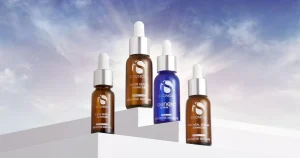
We stick with professional-grade options at Collab Medspa for exactly this reason. Right now, we lean on two: iS Clinical Hydra-Cool Serum and SkinMedica HA5.
- iS Clinical Hydra-Cool is our go-to when someone needs a real hydration boost fast. It’s concentrated, so a small amount goes a long way; great for skin that’s genuinely depleted.
- SkinMedica HA5 takes a different route. It blends multiple forms of hyaluronic acid together, aiming for both an immediate hit of hydration and support that lasts through the day.
Which one’s right for you depends on your skin, what you’re already using, and what you’re actually trying to fix.
Do You Need to Spend a Lot on Hyaluronic Acid?
Not for the sake of spending. We’re not in the business of talking people into products they don’t need. But formulation quality does matter – a cheap, poorly made HA product isn’t doing much for you. Our take: if you’re going to invest in your skin, invest in it the right way. That doesn’t mean ten products crowding your bathroom counter. Honestly, we’d rather see the opposite.
What actually moves the needle is the right products, in the right combination, used consistently. A ten-step routine you abandon after two weeks won’t do anything. A simple routine you actually stick with will.
How Do You Actually Use Hyaluronic Acid?
Order matters more than people think.
A typical morning routine we recommend:
Cleanser → Serum → Hyaluronic Acid → Eye Cream → Moisturizer → Sunscreen
And at night:
Cleanser → Serum → Hyaluronic Acid → Eye Cream → Night Cream, Moisturizer, or Facial Oil
We usually suggest applying serums while skin’s still a little damp — it just glides on better. But don’t stress over getting that perfectly right. What actually matters is what comes next. – Don’t skip the moisturizer. – HA holds water in place; the moisturizer is what locks it in.
Can You Use Hyaluronic Acid With Retinol or Tretinoin?
Yes, and honestly, it pairs well. Retinol and tretinoin can leave skin feeling dry or irritated, especially early on. HA helps offset that, keeping the rest of your routine from feeling like a fight against your own skin.
That said, everyone’s skin responds differently. If you’re on prescription tretinoin, acne medication, or juggling several actives at once, it’s worth having someone actually look at your full routine. Sometimes the issue isn’t one product; it’s how several products are interacting, or the order you’re using them in.
Do You Really Need This in Arizona?
For most of our clients, yes. Scottsdale’s climate doesn’t do your skin any favors. Even oily skin can end up quietly dehydrated out here without anyone realizing it.
So no matter what skin type walks through our doors, HA tends to have a role:
- Dry skin — gives it something to hold onto
- Oily skin — hydrates without adding more oil
- Acne-prone skin — supports the healthy skin that clear skin depends on
- Aging skin — brings back that softer, more resilient feel
Hyaluronic acid isn’t just a “dry skin ingredient.” It’s closer to a foundational one.
So What’s the Best HA Product for You?
Honestly? It depends on your skin and what you’re already using – which is exactly why guessing rarely works. Rather than grabbing whatever’s trending and hoping for the best, we’d rather sit down, look at your current routine, and figure out what’s actually missing. From there, we can recommend something that works with what you’re doing, not against it.
Our goal at Collab Medspa was never to sell you a shelf full of products. It’s to help you build something simple that actually fits your skin, your life, and what you’re trying to achieve. Good skincare doesn’t have to be complicated. Sometimes it really does come down to the right products, in the right order, used consistently — and yes, sometimes that missing piece is a good hyaluronic acid.